
Ready to grow again
Fruit
- Fruit
- 94
- Practised by
- 27
Whole places brought back by people, and the proof, seen from space.
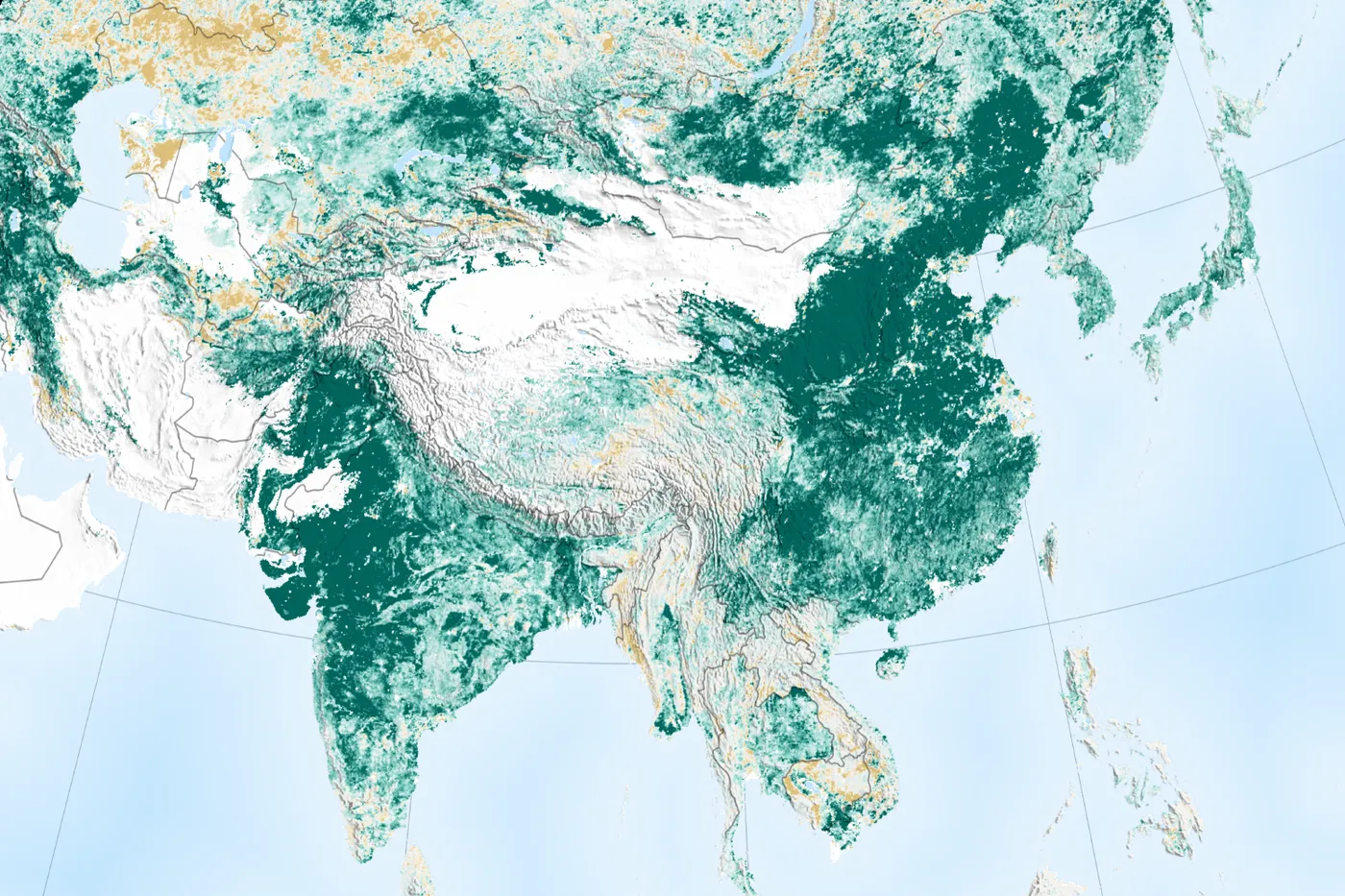
Shaanxi, Shanxi, Gansu and Inner Mongolia, China · 1994 to 2005 (and since)
Loess Plateau
about 35,000 km² in two World Bank projects
The Loess Plateau had one of the highest erosion rates in the world. From 1994, farming families built terraces and small dams, stopped free grazing and replanted the slopes. Vegetation cover doubled, incomes doubled and the Yellow River carries far less soil.
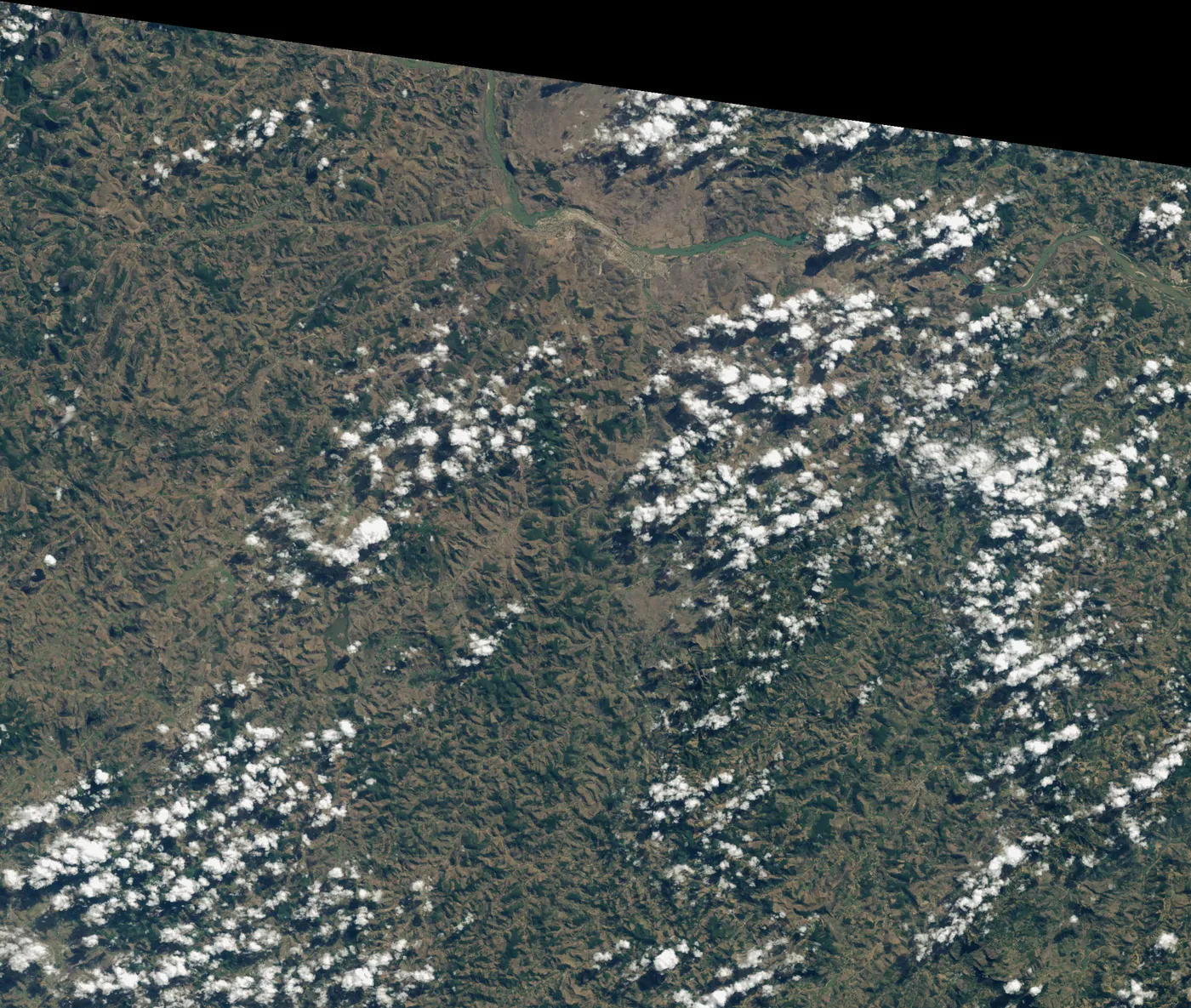
Fazenda Bulcão, Aimorés, Minas Gerais, Brazil · 1998 to now
Instituto Terra
608 hectares of Atlantic Forest
When the Salgados came home to Aimorés in the 1990s, the family farm was bare and eroded. Lélia suggested they plant the forest back. Two decades on, the hills are forested, many species have returned and dry streams flow again.
Maradi and Zinder regions, southern Niger · 1983 to now
Niger's farmer-managed regreening
about 5 million hectares
After the droughts of the 1970s and 1980s, southern Niger's farmland was nearly bare. Farmers began protecting the shoots of living tree stumps in their fields. The trees came back across millions of hectares, at very low cost.
Tigray, northern Ethiopia · 1991 to 2020
Tigray
more than 1 million hectares
After famine and war in the 1980s, Tigray's communities spent about 30 years terracing hills, building check dams and closing worn-out land to grazing. Groundwater came back, irrigation grew from about 40 to almost 40,000 hectares, and the region won a UN-backed gold award in 2017. The 2020 to 2022 war took a terrible toll on people and on this work.
Hangjin Qi, Ordos, Inner Mongolia, China · 1988 to now
Kubuqi Desert
more than 5,000 km² planted
Sand was burying the Hangjinqi salt works and the roads out of it. Its manager, Wang Wenbiao, began planting to hold the dunes. Over 30 years the work grew into a large, state-supported and company-led project, recognised by UNEP, with real gains and real questions about water.
Al Baydha, Makkah Province, Saudi Arabia · 2010 to 2016 (active work)
Al Baydha Project
about 70 mm of rain a year
Al Baydha is in rocky, very dry foothills south of Mecca. From 2010 the project shaped the land to catch rare floods, then planted hardy trees. Funding stopped in 2016, yet the trees lived and the land now greens up after rain.
Mulloon Creek, near Bungendore, NSW, Australia · 2006 to now
Mulloon Creek
a 23,000 hectare catchment
Mulloon Creek had cut deep into its floodplain. In 2006 farmer Tony Coote and landscape thinker Peter Andrews began rebuilding it with living leaky weirs. The creek now holds its flow in dry times, and about 20 landholders have joined in.
Republic of Korea · 1973 to 2000s
South Korea's forests
about 64 percent of the land now forested
After occupation and war, most of South Korea's mountains were bare. From 1973 a national plan, carried out village by village, replanted the hills ahead of schedule. Today forest covers about two thirds of the country.
Costa Rica · 1987 to now
Costa Rica's forests
from 21 to about 52 percent forest cover
In the 1980s Costa Rica had one of the highest deforestation rates in the world. A 1996 law banned clearing forest and set up payments to landholders for the services forests give. Forest cover more than doubled.
- Sapling
Alternatives to crop residue burning
Give farmers affordable ways to sow through, mulch or sell crop straw so they no longer need to burn it.
- Tree
Banking correspondent agents
Local shops, post offices and kiosks act as licensed agents of a bank, so people in towns with no branch can pay bills, deposit, withdraw and open accounts nearby.
- Tree
Barefoot women solar engineers
Villages choose older women to train as solar engineers, who then electrify and maintain their own community's power.
Community and Voice · Home and Livelihood
- Sapling
Biochar from farm and forest residues
Farmers turn crop stalks, prunings and invasive shrubs into charcoal in simple low-smoke kilns and dig it into soil, instead of burning residues in the open.
- Tree
Bioenergy villages (community-owned local heat and power)
A whole village forms a cooperative with its farmers to turn locally grown biomass and manure into heat, piped to most homes through a village heat network, and electricity sold to the grid.
- Tree
Black soldier fly larvae processing of organic waste
Feed separated food and market waste to black soldier fly larvae, which shrink the waste and turn it into protein for animal feed plus a compost-like residue.
- Tree
Citizen buy-back of the local power grid
Residents use a vote, a co-op or a city utility to take the local electricity grid back from a big private operator and run it for the town and for clean energy.
- Tree
Citizen science waterway monitoring
Trained local volunteers regularly test their own creek or river and feed standardised data to agencies, catching pollution early and building a long-term record.
- Sapling
Citizen shareholder companies for regional food value chains
Local citizens buy shares in a regional company that invests in organic farms, processors and shops, buys farms and leases them to new farmers, and reports social and ecological returns alongside financial ones.
- Tree
Citizens' assembly on climate
A randomly selected, demographically representative group of residents learns from experts, deliberates and recommends climate policy to decision makers.
- Sapling
City Doughnut portraits
A city or region draws its own Doughnut, a social foundation no one should fall below and an ecological ceiling it should not overshoot, then uses that portrait to set targets and test decisions.
· practised by 1 on the Landscape
- Tree
Citywide source-separated food scrap collection
Every household and business separates food scraps into a dedicated bin that the city collects and turns into compost or biogas.
- Sapling
Clustered ecological smallholdings with on-site homes
A co-op buys bare farmland, splits it into small plots, wins planning permission for low-impact homes and shared infrastructure, and leases plots to new farmers at cost.
- Sapling
Community (neighbourhood) batteries
A shared battery on the local street grid stores neighbours' surplus daytime solar and returns it in the evening, so renters, apartment dwellers and low-income households can use stored solar without owning a battery.
- Tree
Community air quality monitoring networks
Residents host low-cost air sensors, share the data openly and use the local evidence to push for cleaner air.
- Tree
Community currency
A local money, issued and governed by the community, that keeps spending and credit circulating among neighbours and local businesses.
Community and Voice · Home and Livelihood · practised by 3 on the Landscape
- Tree
Community food forests on public land
Turns idle public land into a layered, perennial forest of food plants that anyone can harvest and a community looks after.
- TreeAsk custodians first
Community forest management
Legal rights to manage, use and earn from forests go to organised local communities, which then protect them better than many parks do.
Climate and Air
- Tree
Community land trusts for permanently affordable homes
A community-run nonprofit owns the land for good and sells or rents the homes on it, so they stay affordable for every family that comes next.
· practised by 2 on the Landscape
- Sapling
Community listeners' clubs (Dimitra clubs)
Small village groups of women, men and young people meet regularly, talk through shared problems, often with a solar radio linking them to community stations, and then act together, with women taking up leadership along the way.
- Tree
Community micro-hydro mini-grid
A village builds, owns and runs a small run-of-river hydro plant and local grid, giving reliable renewable power where the national grid does not reach.
- Tree
Community paralegals for land and legal empowerment
Locally chosen, trained paralegals help communities understand, use and defend the law to protect their customary land and settle disputes.
- SaplingAsk custodians first
Community pasture user unions
Herders who share seasonal pastures form a legally recognised group that plans grazing, rests degraded land and collects fees to manage it.
· practised by 1 on the Landscape
- Sapling
Community resilience hubs
Trusted, everyday neighbourhood buildings equipped with backup power and supplies and run with residents, so people have somewhere to turn before, during and after disasters.
- Tree
Community seed bank
A locally run store of farmers' own seed that members borrow, grow out and return, so diverse, adapted varieties stay in community hands.
· practised by 1 on the Landscape
- Tree
Community solar gardens for renters and low-income households
Households that cannot put panels on their own roof subscribe to a share of a nearby solar array and get its output as credits on their power bill.
- Sapling
Community tiny forests
Neighbours plant and care for a dense, tennis-court-sized forest of native species on unused urban land, creating a cooler, wilder spot and a local climate action they can see grow.
- Sapling
Community wealth building through anchor institution procurement
Hospitals, councils, colleges and police that are rooted in a place redirect their spending and hiring toward local and co-operative businesses.
- Sapling
Community-based mangrove restoration
Coastal communities restore mangroves by repairing tidal flows and protecting natural regrowth, storing carbon and rebuilding fisheries and coastal defences.
- Tree
Community-led peatland rewetting
Block old drainage ditches so degraded peat stays wet, stops burning and stops releasing carbon, with local people building, siting and maintaining the dams.
- Tree
Community-owned farmland trust with long leases
Citizens pool money to buy farmland, take it off the speculative market for good, and lease it on long, affordable terms to new ecological farmers.
Home and Livelihood · Nourish
- Tree
Community-owned renewable energy co-operative
Locals pool small investments to own a wind or solar project together, so the power, profits and decisions stay in the community.
Climate and Air · Home and Livelihood
- Tree
Community-run native tree nurseries
Volunteers or community groups collect local seed and grow native seedlings that supply nearby restoration, corridor and habitat planting, including koala food trees.
- Tree
Community-scale composting hub
Neighbours pool food scraps at a shared local site that turns them into compost for gardens, street trees and farms, keeping organics out of landfill.
Soil and Clean Earth
- Tree
Conservation covenants on private land
Landholders voluntarily register a binding agreement on their land title to protect native habitat, often permanently, sometimes with annual stewardship payments.
- Tree
Consumer co-op joint purchasing groups
Neighbours order together in small groups through a member-owned co-op that contracts directly with farmers on agreed standards and prices, cutting waste and chemical use.
- Tree
Consumer-owned district heating
Households jointly own a not-for-profit heat network that warms a whole town from shared, increasingly renewable sources, so heat is sold at cost and fuel can be switched for everyone at once.
- Tree
Cooperative car sharing
Neighbours co-own a shared fleet of cars so fewer households need to own one, cutting car numbers, kilometres driven and household transport costs.
- Sapling
Council Koala Plans of Management built on community koala mapping
Residents' koala sightings and field surveys are turned into a shire-wide habitat map, and the council writes it into binding planning rules and a funded restoration program.
- Tree
Deposit return scheme for drinks containers
A small refundable deposit on every bottle and can makes empties worth returning, so most come back clean and get recycled instead of littered or landfilled.
- Tree
Energiesprong whole-house net-zero retrofit
Factory-made insulated facades, roofs and heat-pump energy modules turn existing homes net-zero in days, with performance guaranteed and paid for from the energy bill.
- Tree
Fare-free public transport
A town or region drops bus and tram fares for everyone and pays for the network from local taxes, so getting around without a car costs nothing at the point of use.
- Tree
Farm gleaning networks
Volunteer crews harvest crops that farms cannot sell and deliver them the same day to food banks and pantries.
- Tree
Farm incubator
Gives new farmers a few years on shared land, tools and mentoring so they can test and grow a farm business before taking on their own land.
- Tree
Farm machinery-sharing cooperatives
Neighbouring farmers jointly own or swap tractors, tools, workshops and even workers, so no one has to buy a full set of machinery alone.
- Sapling
Farmer solar irrigation cooperatives
Farmers run grid-connected solar pumps together and sell surplus power to the utility, turning sunshine into a cash crop that rewards saving water.
- TreeAsk custodians first
Farmer-to-farmer agroecology exchange (Campesino a Campesino)
Farmers who have tested a soil-saving practice on their own land teach neighbouring farmers through visits, small trial plots and exchanges, so regenerative methods spread sideways without depending on outside extension officers.
- Sapling
Farmland matching and intermediary land banks
A trusted go-between connects retiring or absent landowners with new and expanding farmers and brokers secure leases, joint ventures or transfers, so land stays farmed.
- Sapling
Farmworker-led nonprofit housing developer
A nonprofit rooted in the farmworker community builds and runs permanent, affordable family rentals for farmworkers, paired with services.
- Tree
Food policy councils
A standing table of citizens, farmers, food businesses and officials that shapes a city's or region's food policy together.
- Tree
Gender Action Learning System (GALS)
Women and men draw shared household and community visions with simple pictograms, then plan, track and pass the method peer to peer.
- Sapling
Grower-funded farmworker housing
Farm owners fund decent, low-rent housing for the people who work their land, either collectively through a self-imposed per-acre levy or directly as employer-built housing.
- Tree
Heat-treated food waste as pig feed (ecofeed)
Surplus and leftover food is collected, heat-treated and fed to pigs, replacing imported grain and soy feed.
- Sapling
Holistic planned grazing
Herders move livestock through many small paddocks on a written plan, giving each patch long rests so grass, soil and water recover.
- Sapling
Independent citizen-run town councils (flatpack democracy)
Local people with no party ties stand together on shared ways of working, win the town council and run it openly to deliver practical local action, including on climate.
- TreeAsk custodians first
Indigenous joint management of protected areas through land use agreements
Traditional Owners and a parks agency share the management of protected land under a binding agreement, so Country is conserved with its custodians, not instead of them.
- TreeAsk custodians first
Indigenous ranger and guardian programs
Paid Indigenous rangers or guardians, employed by their own communities, care for and monitor their traditional lands and waters on their own terms.
· practised by 1 on the Landscape
- SaplingAsk custodians first
Indigenous-led land return through land trusts
Land is bought, gifted or transferred back to Indigenous Peoples, often through an Indigenous-led trust, so they can care for Country on their own terms.
Community and Voice · Living World
- Sapling
Interest-free member savings-and-loan banks
Members save without earning interest and in return can borrow from the shared pool without paying interest, with a points system keeping savings and borrowing in balance.
- Tree
Landcare groups
Neighbours form local volunteer groups that repair land and water together, backed by a network that brings in coordinators, funding and know-how.
· practised by 2 on the Landscape
- TreeAsk custodians first
Landscape rehydration with leaky weirs
Small porous structures and vegetation slow water in creeks and gullies so it soaks into floodplains and recharges groundwater.
· practised by 1 on the Landscape
- SaplingAsk custodians first
Legal personhood for rivers and ecosystems
A river, forest or lagoon is recognised in law as a living entity with its own rights, and named guardians speak for it in court and in planning.
- Tree
Library of Things
A shared lending library for tools, appliances and gear, so a neighbourhood owns one good drill instead of fifty idle ones.
· practised by 1 on the Landscape
- Tree
Local peace committees
Standing community committees of rival groups, officials and civil society that mediate disputes early and stop them turning violent.
- Tree
Mandatory supermarket surplus food donation laws
Laws that require large food retailers to give unsold edible food to charities instead of binning or destroying it.
- Tree
Member-owned farm with a salaried farmer
Local households jointly own or lease a farm, decide what it grows, and pay a farmer a steady salary to run it.
· practised by 1 on the Landscape
- TreeAsk custodians first
Member-owned savings and credit groups
Neighbours pool regular small savings into a fund they own and govern, and lend it back to each other, giving people financial services where banks don't reach.
Community and Voice · Home and Livelihood
- TreeAsk custodians first
Member-run burial societies
Neighbours pool small regular contributions so any member family can cover a funeral and get practical help when someone dies.
- Tree
Mutual self-help housing
Groups of low-income families build each other's homes together, and their labour becomes the down payment.
Home and Livelihood
- Tree
National household biogas programmes
A national programme builds a private market of trained masons and companies who install small household digesters that turn livestock manure into clean cooking gas and fertiliser, replacing smoky firewood and dung.
- Tree
Paid integration of waste-picker co-operatives into city recycling
Cities contract organised waste pickers to collect and sort recyclables and pay them for the service, turning informal, unpaid recovery work into a recognised public utility.
· practised by 3 on the Landscape
- Tree
Participatory budgeting
Residents directly decide how part of a public budget is spent, which moves money toward basic services in poorer areas.
- TreeAsk custodians first
Participatory community mapping for land rights
Communities map their own customary territory with sketch maps, GPS and 3D models, turning unwritten tenure into evidence that governments and courts recognise.
- Tree
Participatory Guarantee Systems
Farmers, eaters and technicians vouch for organic and agroecological growers together through peer farm visits, instead of paying an outside certifier.
· practised by 3 on the Landscape
- Tree
Participatory member-run supermarkets
A full supermarket owned and staffed by its shoppers, each working about three hours a month, so it can sell good food at low margins and choose its producers.
- Sapling
Peace parks
Protected areas that span a contested or shared border, managed jointly so neighbours cooperate over nature instead of fighting over it.
- Tree
Repair café
Volunteers with fixing skills meet neighbours monthly to repair broken things together, for free.
Climate and Air · Living World · practised by 2 on the Landscape
- Tree
Reserved seats for women in local government
Law reserves a share of council seats or council head posts for women, often rotating which seats are reserved, so women hold real local power and communities get used to seeing them lead.
- Tree
Resident-owned manufactured home communities
Residents of a mobile or manufactured home park form a cooperative and buy the land under their homes, ending exposure to investor rent hikes and closures.
- Tree
Revolving funds for conservation land
A trust buys threatened land, places a permanent covenant on the title, resells it to a conservation-minded owner and reuses the money to buy the next property.
· practised by 1 on the Landscape
- Tree
Rooftop solar for social housing and low-income households
Governments, housing providers or community energy groups put solar on the roofs of social and low-income homes at no upfront cost so tenants get cheaper daytime power.
- Tree
Shared rooftop solar for apartment residents
One rooftop solar system on an apartment building is split behind the meter so every flat, including renters, buys cheap on-site power.
- Sapling
Solar-powered cold rooms for smallholder produce (pay-per-crate cooling)
Off-grid, solar-powered walk-in cold rooms at farms and markets that farmers and traders rent by the crate per day, so fresh produce lasts weeks instead of days.
- Tree
Solarize bulk-buy campaigns
Neighbours sign up together in a short, time-limited campaign to buy rooftop solar from one vetted installer at a group price, so each household owns its own panels for less.
- Tree
Solidarity finance cooperatives
Members pool their savings and share capital in a cooperative that lends it to cooperatives, associations and social enterprises that mainstream banks overlook.
· practised by 2 on the Landscape
- Tree
Volunteer food rescue and sharing network
Volunteers collect surplus food from shops and neighbours and share it for free through public fridges, apps or community meals.
· practised by 1 on the Landscape
- Sapling
Volunteer koala corridor planting on private land
A community group links up farms and backyards with volunteer-planted koala food trees to reconnect fragmented habitat.
Living World · practised by 1 on the Landscape
- Tree
Wildlife crossings with exclusion fencing
Underpasses, overpasses and rope or pole bridges, paired with fencing that funnels animals to them, reconnect habitat split by roads and stop roadkill.
- Tree
Women-run community kitchens
Neighbourhood women pool food, fuel and labour to cook shared meals, feeding families through hard times and growing local women leaders.
- Sapling
Women-run vermicomposting enterprises
Women's groups turn manure, crop residues and market or kitchen scraps into worm compost they use and sell, cutting waste and fertiliser bills while earning their own income.
- SaplingAsk custodians first
Women's peace huts
Women-run community spaces where women mediate local disputes, support survivors of violence and link villages to police and services.
- Tree
Women's self-help group federations
Small neighbourhood groups of women save together, then federate upward so their members gain a collective voice in local government.
- Sapling
Young farmer peer networks
New and young farmers organise into local chapters to share skills, land leads and support, and push together for land-access policy.
- TreeAsk custodians first
Zaï planting pits and half-moons
Small dug pits (or larger half-moon basins) filled with manure catch the first rains and turn crusted, bare Sahelian ground back into fields that grow grain and trees.